Editor’s note: Glen Schofield gave me an interview about his impending retirement back in May at our GamesBeat Summit event. Well, I checked in with him but didn’t hear back. And now he has surprised us with an announcement of his retirement on social media. So while this interview may be exclusive, it’s perhaps not as exclusive as we thought. But in any case, thanks to Glen for all the games and I wish him a happy retirement.
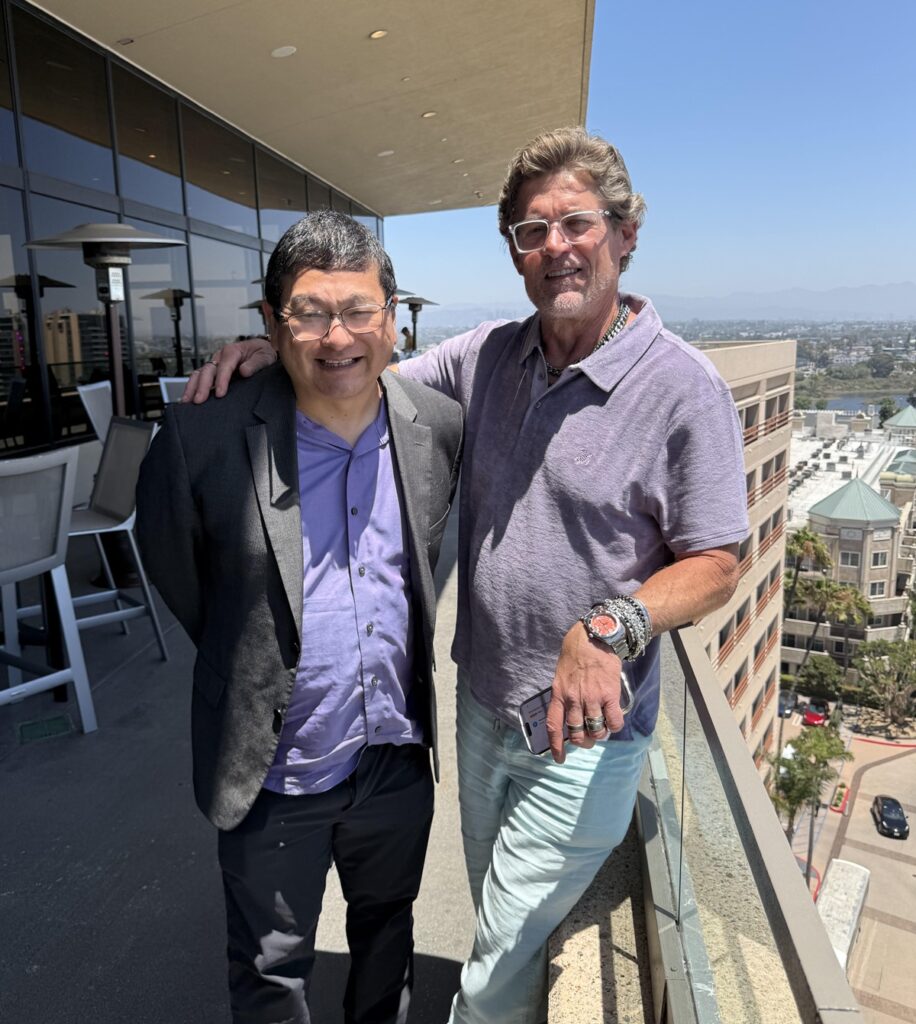
The creator of Dead Space and The Callisto Protocol has decided to retire after 36 years in the game industry. Schofield’s video thanked his family, Electronic Arts and Activision, and “the people who supported us in video games.” He said he had a front row seat to one of the greatest creative explosions in history and wished the future game makers the best.
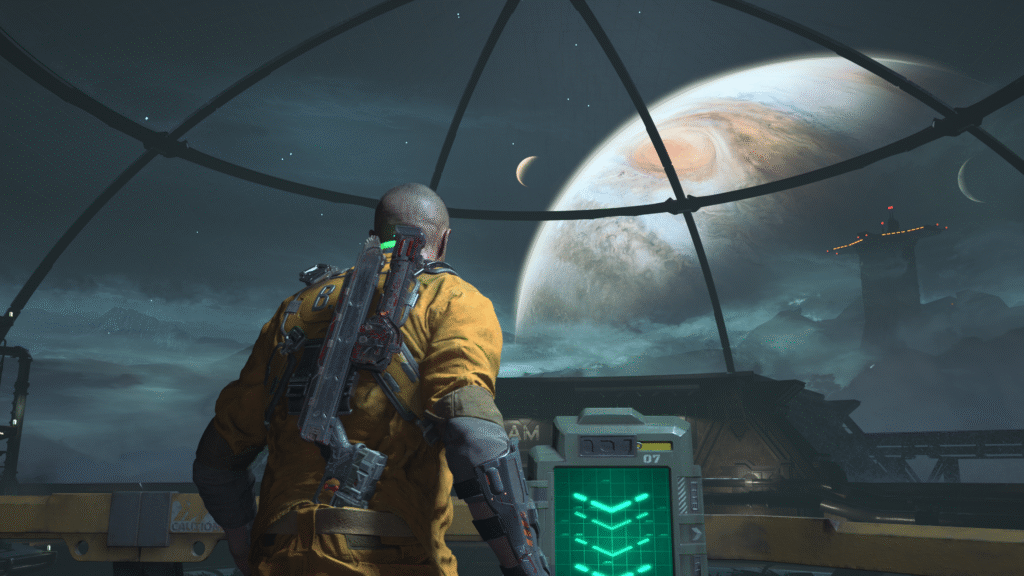
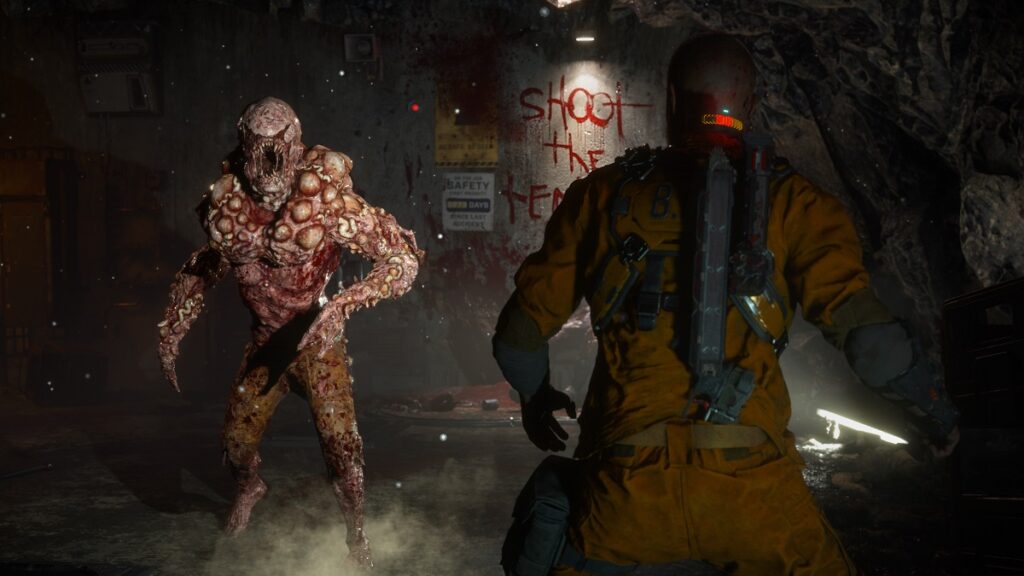
After shipping The Callisto Protocol, a survival horror game, in 2022, Schofield took a break. It was the last in a long line of triple-A shooter games that Schofield had worked on in his career. And now he’s decided it’s his last.
The game had a very “extremely hard” development cycle for Schofield and Striking Distance Studios, the game company he founded in 2019 after leaving Activision’s Sledgehammer Games, a major Call of Duty studio. It was tough in part because of COVID-19, and he decided, “I don’t know if I can do the day to day anymore.”
I talked with Schofield and Void Interactive studio head Chris Stone about the shooter market at the GamesBeat Summit event. But Schofield also surprised me in an interview there where he disclosed he is retiring from games after 36 years of making games.
Schofield may still advise teams about games, but he’s not going to be leading a studio anymore or build an AI game studio, as he was hinting at in the past. Schofield got started in 1990 working on the title Barbie Game Girl as a 2D artist. He has made around 31 games during his career, and he worked on many more.
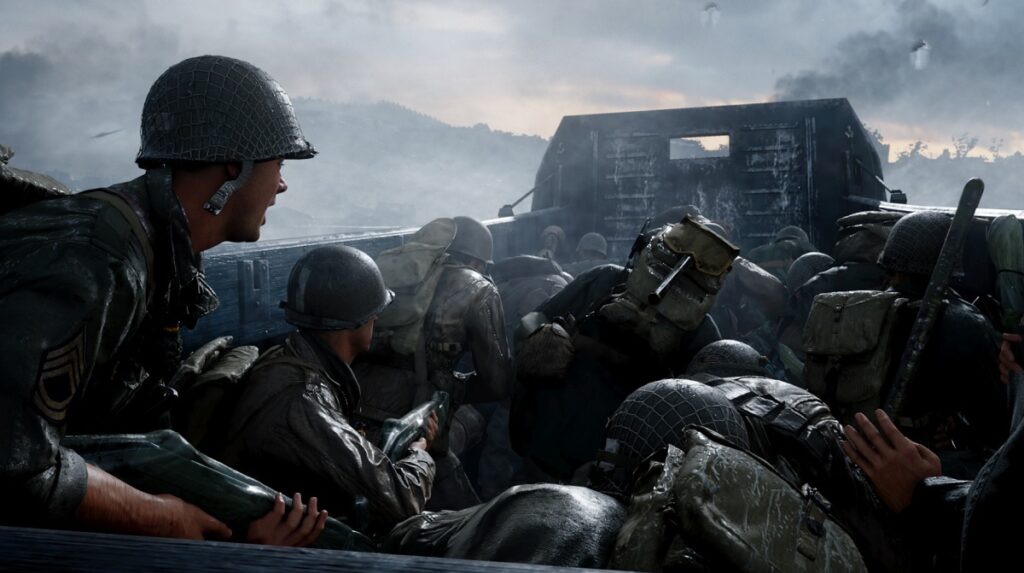
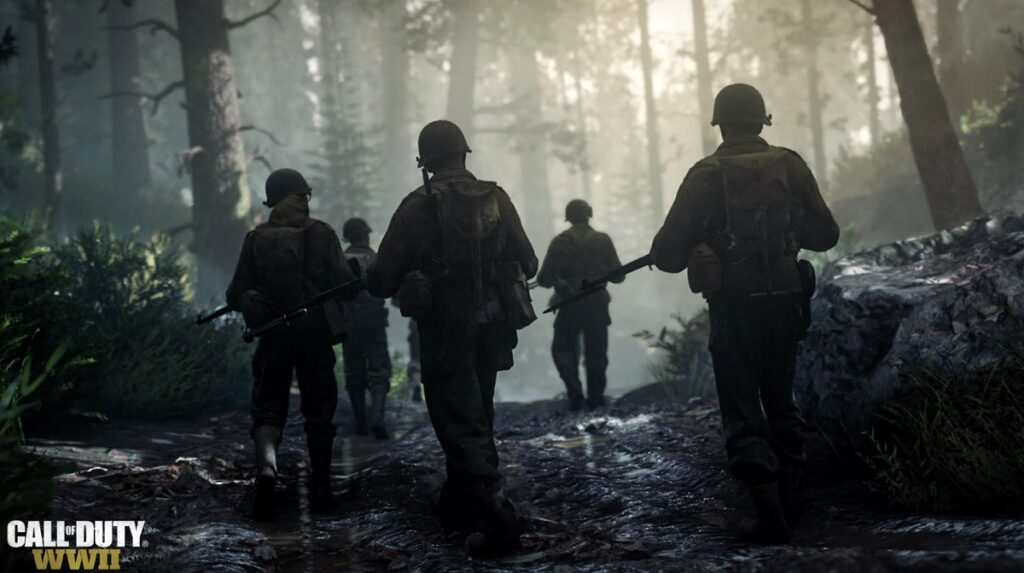
Schofield started to make his mark at Crystal Dynamics, where he was the game director on six games such as Gex 3D: Enter the Gecko. That studio was sold to Eidos, and then Schofield made his way to Electronic Arts, where he worked no The Lord of the Rings games. He started the EA studio that became Visceral Games, and that’s where he became the creator on Dead Space. He worked on The Godfather II as well. In 2009, Schofield and Michael Condrey started Sledgehammer Games and they started working on Call of Duty games. Their biggest projects were Call of Duty: Modern Warfare III, Call of Duty: Advanced Warfare and Call of Duty: WWII.
Then he went to Krafton and started Striking Distance Studios to make The Callisto Protocol. And now he’s retiring.
“This is the hardest decision of my life because it’s a dream job,” he said. “It’s been a dream career. The people have been mostly kind to me. They let my games into their homes. The fans are everything. We’re nothing without the fans.”
Here’s an edited transcript of our interview.
GamesBeat: I guess we can think of this as an exit interview. You’re planning on retiring. Or “retiring” right now. What made you decide that this is the way to go?
Glen Schofield: I took some time off after finishing Callisto, which was an extremely hard development because of COVID. We just worked through it. It was the hardest development in my life. I didn’t think anything could be harder than Lord of the Rings, but that one was. During that time–I’ve always been painting and drawing and doing all that stuff. I picked up sculpting. I’m painting. I’m drawing. As I’m thinking during this, I’m like, “I don’t know if I can do the day to day anymore.”
I had gotten in shape. I was losing weight. My purpose was to be in shape to go do the next game. I just had back surgery a couple months ago. I realized that as I get older, I’m not going to have the stamina, I don’t think. It’s not necessarily that. But I think my time is–I’ve had a great time. I’ve had a fantastic career. It seems like an inflection point in the industry. A time for the next generation to emerge and do their own thing. I see a lot of my peers retiring too.
GamesBeat: How long a career was it, if you mark 2026 as the end?
Schofield: Since 1990. I started as a 2D artist. I did Barbie Game Girl as my first game. Back then, if you were an artist, you designed a game. You did the art. You did the animation. You did everything. There were only artists and programmers. Even the programmers would do the music and so on. I didn’t hire my first designer until 1995.
GamesBeat: What tools were you using back then?
Schofield: I used DPaint and DAnimate. Then we moved up a bit and started using Photoshop, but it was pretty tough back then. Barbie Game Girl was in four shades of gray-green. There was one year I worked on 11 games, because back then they were so small that you could work like that. I believe I’ve made about 30 or 31 games, and then I’ve worked on a whole bunch more. At Electronic Arts I jumped on and helped out one of the Lord of the Rings games. I did the co-op. I worked on Return of the King, and then I jumped on and helped out Steve Gray.
Things like Dead Space 2–I want to talk about good stuff, I guess. This is the hardest decision of my life, because it’s a dream job. It’s been a dream career. The people have been mostly kind to me. They let my games into their homes. The fans are everything. We’re nothing without the fans. I don’t know if they realize how much power they have, but if the fans are happy, everybody’s happy. Stock market, everybody.
GamesBeat: What was some of that early progression like, from Barbie onward?
Schofield: After Barbie–I was the new guy. That’s why they gave me Barbie. We were about 12 people at Absolute Entertainment. We were above a hairdresser in New Jersey. We could smell the chemicals from time to time. But Barbie Game Girl ended up outselling every game we had that year, so they made me art director. I’ve always kind of been in more of a leadership role. A lot of artists are quiet, and I’m not so quiet.
One thing I can tell you–my goal wasn’t like, I’m going to make money. My goal was to be an artist growing up. When I got into video games I realized that my goal had to be creative autonomy. That’s why I started my studio. That’s why I did stuff like that. And Dead Space, too, because they wanted me to make another Bond game. I said, “No, I won’t.” It took a while for Paul Lee, but he approved Dead Space. That’s what pushed me my whole career. I wanted creative autonomy.
I walked into those rooms with the executives–these were great people who made great decisions. But when they started getting to the creative side, I thought, “Look, you’re the most organized guy in the room. You’re the smartest guy in the room. But I’m the most creative guy in the room.” I would never say that. But I didn’t want them affecting me that way. I have to say that most people gave me that. They gave me the sandbox.
GamesBeat: How did you become the person you became at EA?
Schofield: In 1990 I started at Absolute Entertainment with Garry Kitchen. Him and David Crane. I spent a few years there. We even went public at Absolute. I didn’t realize it at the time, but I was absorbing all of that. We went from 12 people to 150, 170. But the walls started crashing a bit at one point. I got an offer from Capcom to be art director up there at Capcom America, which was brand new. I was the third person hired. The others were the president and vice president. Guess who did all the work?
I came in as art director. I ended up producing, learning how to do that. But I only stayed there two years. I worked on Street Fighter: The Movie and a couple of other things. We were having a tough time there, but I was making games, moving forward, meeting people. A lot of people moved out from New Jersey with me. Very formative. I was learning how to design, how to be a leader. I had David Crane at my first company, a legend. He’s in the Hall of Fame. Then I had Yoshiki Okamoto when I was at Capcom. He taught me a bunch of stuff.
Then I got a call from Crystal Dynamics. One rainy Friday, I remember. They were right up the road. I went up there. I brought all my drawings, put everything out there, and they immediately hired me as a producer for Gex or whatever. But when I got there, they put me in charge. My first game that I directed–now, I designed other games I’d worked on. But the first game I directed was actually my first 3D game, Gex 3D: Enter the Gecko. We learned with a really good engine. I directed six games at Crystal. That’s where I really learned directing.
GamesBeat: How did you get your mind around that transition from 2D to 3D?
Schofield: For me, I viewed 3D not as a tool. I viewed it as a medium. I was playing around in a new medium. Can we make him walk on the ceiling? What can we do with the camera? We were learning a lot. It was like a blank book. Anything you did was new. We were going head to head with Crash Bandicoot. My lead designer on those two games was Evan Wells, and my lead artist was Bruce Straley.
GamesBeat: Naughty Dog.
Schofield: Yeah, a lot of these guys have gone on. We had fun. We got bought by Eidos. I was part of the team that decided on Eidos, because we had a couple of offers. They came in and made me a co-GM with Sam Player. He did the business end, running the business. I did all the creative stuff. But there was also business stuff in there. During Crystal, even though I’m directing two games at once – they were smaller – I went and got an MBA at night and on weekends. It was hard as hell. But that really helped me even more as an artist, because now they couldn’t pull the wool over my eyes as the industry grew. Nick Earl, who was a big guy, helped me with budgets, helped me with everything else.
Then Nick went over to EA. He’s like, “You gotta come over.” So I went over and I did Knockout Kings. I remember going to EA. I’m in my first executive producer meeting, all the big guys. There’s Neil Young. There’s Larry Probst. Riccitiello came along later. Riccitiello loved Dead Space. I had finished Knockout Kings, but I didn’t finish the bugs, because they called me over and said, “We need you to jump on Lord of the Rings.” Then they gave me the Bond license.
Knockout Kings, I had said no at first. Nick said, “You don’t turn down EA!” I said, “Nick, there’s no creativity for me there. Boxing and all that, it might be fun, but–” He said, “Okay, wherever they fight, you can make it up. Make up your own venues.” I said, “Okay, I’m in.” That’s where I got the creativity in that one. Lord of the Rings was just an opportunity. I wasn’t thinking of my own games just yet. I was coming up with ideas. I was learning. EA was a fantastic place to learn. The people in those rooms, man, they were smart. They were good. I learned a lot.
GamesBeat: You didn’t have the Richard Garriott experience, with a new general manager coming in every six months.
Schofield: I knew what I needed to get. I had run Crystal Dynamics for a while. I had helped start Capcom America. At Absolute I was the 12th guy and we went up over 100. But you don’t realize until you look back with hindsight that that’s all building you up for leadership. And I was learning to design as much as I was learning to do art.
Eventually they wanted me to do another Bond, and I said no. As much as I loved it, it was a pain in the neck. I wasn’t happy with the score we got on it. I gave them my two week’s notice. I had gotten another offer. Then Paul Lee–they were trying to keep me. Paul calls me up on my last day. He says, “What’s it going to take?” They thought it was money and stock and all that.
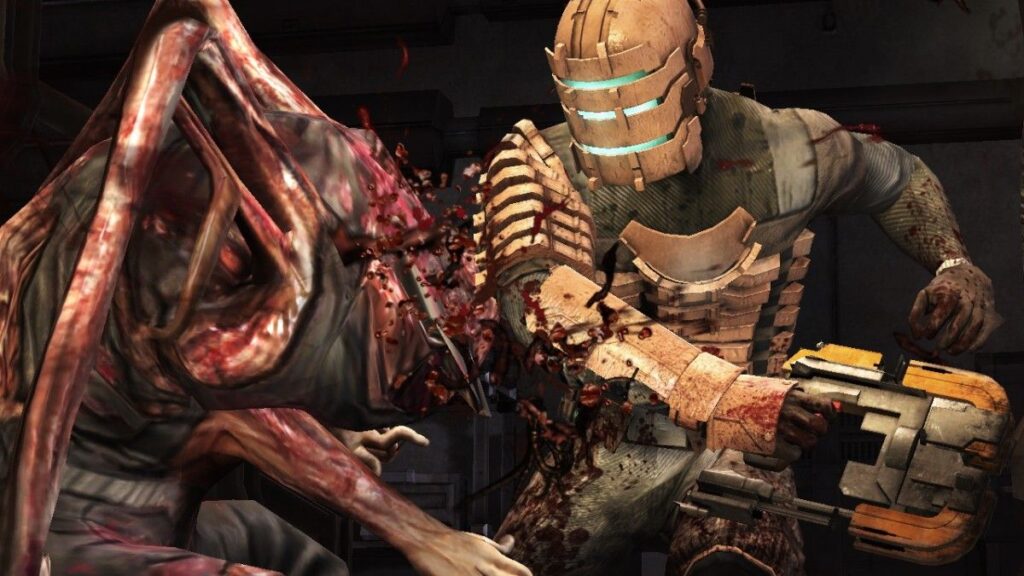
I said, “I just want to make my own game.” He said, “Really? What do you want to make?” I said, “Sci-fi horror.” He said, “We don’t make that at EA.” I said, “Well, you should, Paul. We could be number two.” The difference between Resident Evil and Silent Hill was huge. There was a big gap there. We did the deal in my car. I wrote it on something. I wanted to hand-pick 18 or 20 people. I said, “You gotta put me in a corner and leave me alone.” And he did. Nick Earl was there. He supported me the whole time. We made Dead Space. The rest is, I guess, history.
One thing I’d like to point out, because I don’t do this that often. There’s this one string that says I was the co-creator of Dead Space. I am not. I’m the creator. It’s because somebody went in and adjusted the Wikipedia page. That kinda sucks. But other than that–then they promoted me to run EA Redwood Shores. I changed the name to Visceral. I realized that I was too far out of the creative. Even though I could say whatever I wanted, I wasn’t going to say too much to executive producers. I left Dead Space after writing Dead Space 2, because I wanted to start my own studio. But I didn’t want to go out and raise money. I just wanted to make games.
I went and made Modern Warfare 3. It was an amazing honor. What an honor to get that. That’s why I went there. I didn’t think I was going to get it. When I got there, for six months I was making a Vietnam game, a third-person game. It was called The Fog of War. It was cool. We only worked on it for six months, but–when we were doing that, they were very hesitant. Vietnam was still an open wound in some people’s minds. We were going through tunnels. We were doing some scary stuff. Then I started Sledgehammer Games.
GamesBeat: You were paired with Michael Condrey for quite a long time. How do you think of his role versus your role?
Schofield: “Paired” is a weird–well, I was the creative guy. He’s a scientist. He would say, “I will build your crazy ideas.” I was still GM. I kind of ran it. But he was there running the business part of it. Sledgehammer was an idea I had formed about a year before we got it. I called up my friend Dan Winters. I don’t know if you remember Dan. Great guy. Really good friend. I said, “I can build you a studio a lot cheaper than you can buy one.” Dan was with me.
About 12 months later, we’re going back and forth. One day I get a call. They say, “We want you to start on Monday. Bobby wants you to start on Monday.” Holy shit. They said, “But one thing. You need to get yourself somebody who’s going to do the business so you can do the creative.” Which was what I wanted anyway. I was looking around. I called Condrey over and he came to my house with his family on a Sunday. He said, “I’ll join you if you make me partner.” We had a major falling out at some point.
GamesBeat: Do you feel like you’re both a creative and business person in one person, or do you feel like you’re just creative?
Schofield: I write my business plans. What I needed was someone who was going to take all the tasks and coordinate them and give them to people while I was making the stuff. This is going to sound weird, but in business meetings, my ideas are still creative. People would say that this is black and this is white so we’re going to do this. And I’d say, “Well, I like this gray. I see another answer.” There are lots of times when a creative answer in business is really helpful. Especially this business. That’s what Sledgehammer was. It was a creative idea. People hadn’t done this. Going to someone and saying, “You don’t have to pay me as the owner.”
GamesBeat: There’s a stereotype in gaming where it’s the suits versus the creatives.
Schofield: After a while they just left me alone. They really did. We shipped on time. Always came within budget. I could make a triple-A team, because I knew so many people. I did that for about 10 years. Three Call of Duty games. We were always helping out the other teams, too, Treyarch and everyone else. We all helped each other.
GamesBeat: They had that interesting rotating schedule. Every three years you’d get to do your game.
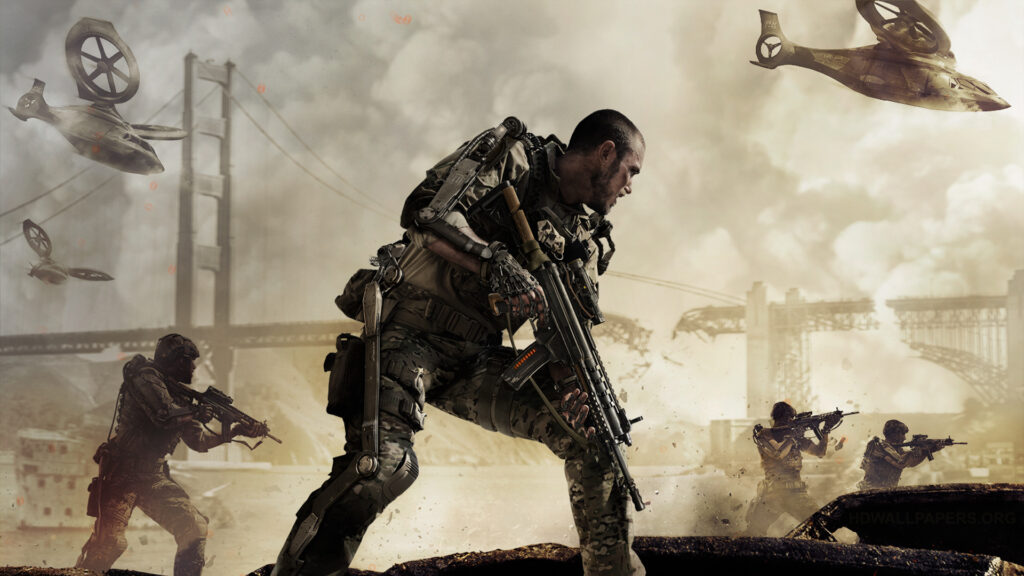
Schofield: It started right when we did Modern Warfare 3. When we finished they made us the third studio. That’s when we made Advanced Warfare, which was my idea. They said, “What do you want to do? We need to do something different.” Then WWII. For me, creatively, Modern Warfare 3 was about the present. Then you had Advanced Warfare about the future and WWII about the past. They were all so different that it was a real creative challenge. It was a great creative thing for me.
GamesBeat: I thought the creativity and the historical research that showed in WWII–it was one of the highest-quality games I’ve ever seen.
Schofield: Thank you. I studied World War II for three years. I hired the curator of the United States national World War II museum down in New Orleans. He took me and a couple of other people in a van across Europe in January. We went to every place that’s in the game. I was in four feet of snow in a blizzard in Belgium. It was freezing. But it was perfect.
GamesBeat: I remember one of the earlier builds I saw where you had the shells exploding over the Hürtgen Forest.
Schofield: The trees. We had that level in there. We went into the Hürtgen Forest. We’re going up this path in the snow, going up the hill. We met this guy who lived in the forest, and he said, “What are you doing?” I said, “Well, I’m getting the feel of being a soldier.” He says, “There are still unexploded shells around here. Just a few months ago they found the remains of an American, 10 feet underground.” We found the scrawls, what the Germans would write inside the bunkers, all that.
That was when we didn’t have an ending. The Big Red One, when they were done, they just went home. I needed an ending. I find this article, after years of digging, a couple of years. It said that there was a camp, a concentration camp, just for Americans, in Aachen, Germany. No one really knew about it. There’d never been a story about it, because when the war ended, Americans just said, “End the war. We don’t want to talk about it. The war is over.” That was a nice ending, when we put that together.
I’ve been around the world. I met some great people all over. So many people have helped me along the way. Just a pat on the back is a big deal for an artist, for a creative person.
GamesBeat: You have a lot of memorable scenes in these games.
Schofield: Interactive big moments. That was one thing. I’d say, “Let’s blow up this church. But I want to be in it when it’s blowing up.”
GamesBeat: The spiritual connection between Callisto and Dead Space–
Schofield: No. It wasn’t. It has a similar vibe because of my style. But people would say it was a spiritual successor. I never said that. Some people would say it should have been more like Dead Space. Other people would say it was too much like Dead Space. It’s gotten a revival since–we did 86 patches. It took three or four months. That was the amount of time–I had asked Krafton to give me more time.
GamesBeat: It was a hard launch.
Schofield: I did enjoy working for them. It was just that–having to get the game done at a certain time. If it happened to me again right now, I would say no. There was just no way.
GamesBeat: Were you beginning to detect some of the frayed edges around triple-A at that point? The rising costs, the things people are complaining about now. It’s just too hard to make some of these things now.
Schofield: I think we spent about $150 million on it. My Call of Duty games were more than $200 million, sometimes much more. But remember, when I started the game, it was before COVID. It was a PS4 game. We’re making it for a couple of months and then Krafton says, “You have to make it for the PS5.” I told them that was about $20 million more. They’re like, “What?” The PS5 doesn’t come with directions. There was all this new technology.
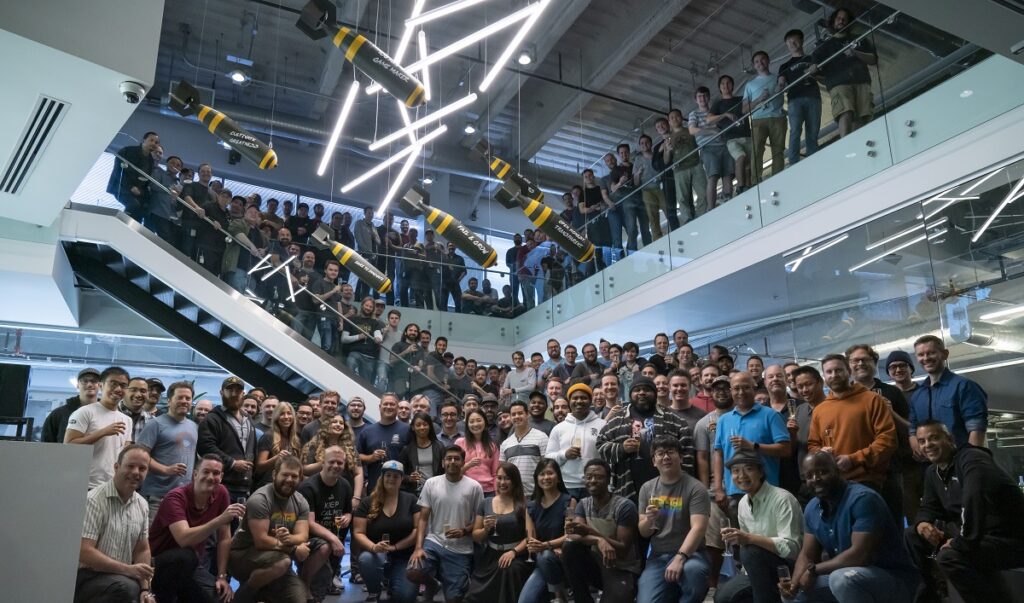
Then we’re about six months into it. I hired Stacey Hirata. We both realized, “They can’t market our game.” I don’t know if you knew, but we built our own marketing team. I had to build a studio. I had to build a team. I had to build a marketing team. We had to make it for the PS5. And of course Xbox. I mean, these costs started ballooning. I think my original budget was around $100 million, and I was trying to make it even cheaper.
What I think happened during COVID is that everybody saw how successful games became. They put money in. They rushed money. They were giving it to people who shouldn’t have had it yet. Oh, he’s a lead designer? Make him a CEO now. That was happening all over. A few hundred million here, $150 million there. You have to have that creative person there, and you have to have somebody to be around them and run it. I’ve been saying that investors need to pick creative people better. They don’t know how. All I need to do is scratch the surface and I’ll tell you whether you’re creative or not. That’s my whole life. I’ve done nothing but creative since I was four, when I started drawing.
I did a bunch of studying. People were talking about how triple-A was dead. Well, what are the first games that come out on consoles? Triple-A. There’s no, “Hey, we’re gonna come out with Barbie Game Girl as our launch title!” Launch titles are big, and the reason is because we take on the bulk of learning. We have the bigger teams, so we plow through, and then we give all our directions, everything we’ve learned, the new engines to everyone who comes after us.
If you look at 2015 or 2016, there’s about 35 triple-A games released a year. About 45% of them release at Christmas. Then some died out. We’d have anywhere from seven to 10 triple-A games at Christmas. COVID comes. Now there’s 50 games a year. Even 10 more, at $200 million each? You’re going to have some losses. The market just can’t take 10 or 15 more of these games. People don’t have the money to buy them. I think we’ve made too many. I mean no disrespect, but we didn’t take the care that we used to in picking the people to make them.
I just think that this next go-round, they should be more careful. But triple-A games aren’t dead. Not in my mind. They will come back.
GamesBeat: We’re in a period of funding drying up, especially in the United States. You look at China, they’re still booming. They have a lot of studios. They’re funding a lot of things. But the money here in the west from venture capital that started around 2019–they’re not getting their second, third, fourth rounds. The limited partners are just not investing.
Schofield: They’re scared. They picked the wrong people. They always say the developer screwed up. No, it goes back. Who picked the developer? If you’re a lead designer and you’ve been elevated to run a company, do you have the network of people that comes with someone like me, who’s been through it? I can legitimately build you a triple-A team. I can get you some of the best in the world. I’m going to hit my deadline. I’m going to hit my budget.
I went out with a couple of games. I met with a lot of investors. I got offered a lot of money from some foreign companies. Two in particular, a shitload of money. But it wasn’t where I wanted to be.
GamesBeat: You took a stab at a couple of things, like AI-based games.
Schofield: I had a couple of AI ideas. I do AI differently. But everyone’s talking about efficiency and budgets and less people and so on. You’re not talking about the idea. For the last 25 years–when I started in the industry, it was $4.7 billion. It’s $250 billion now, on the power of our ideas. Not on the power of my budget or my schedule. It’s the power of my ideas. We’re forgetting that.
I started to think about how I would use AI creatively, not as a tool. That’s when I started to think about how I could use it with cameras. I could use it with special effects. I could use it everywhere. It’s going to be expensive in some places. I believe you will have proprietary pieces of AI. We used to have engines. I think it’s going to be little AI engines, people doing creative stuff with them. You were asking me earlier about 2D and 3D, and I said that we adopted 3D as a medium immediately. People haven’t adopted AI as a medium.
GamesBeat: There’s a prevailing view that AI is just slop. AI is not worth the investment of time to use it, because it’ll just make copycatting easier. There’s very little faith in AI at the moment. You seem to have an embracing attitude.
Schofield: Absolutely. It’s because I’ve seen us go from nothing to the internet. I’ve seen the adoption of cell phones. I’ve seen all this adoption. It’s just another software program to me. It’s going to take time to get better, of course. People want it to fail because they don’t want to learn. There’s going to be stuff that couldn’t be done any other way. You’re going to see some really strange things. I make my own pitches, every single thing in it. I make the pickups, make this, make that. I can make it exactly my own way now. AI has opened up and allowed me to experiment. It lets me experiment so much faster. As an artist that’s all I want to do.
The post Why FPS pioneer Glen Schofield has decided to retire from making video games | exclusive interview appeared first on GamesBeat.
* This article was originally published here


No comments:
Post a Comment